


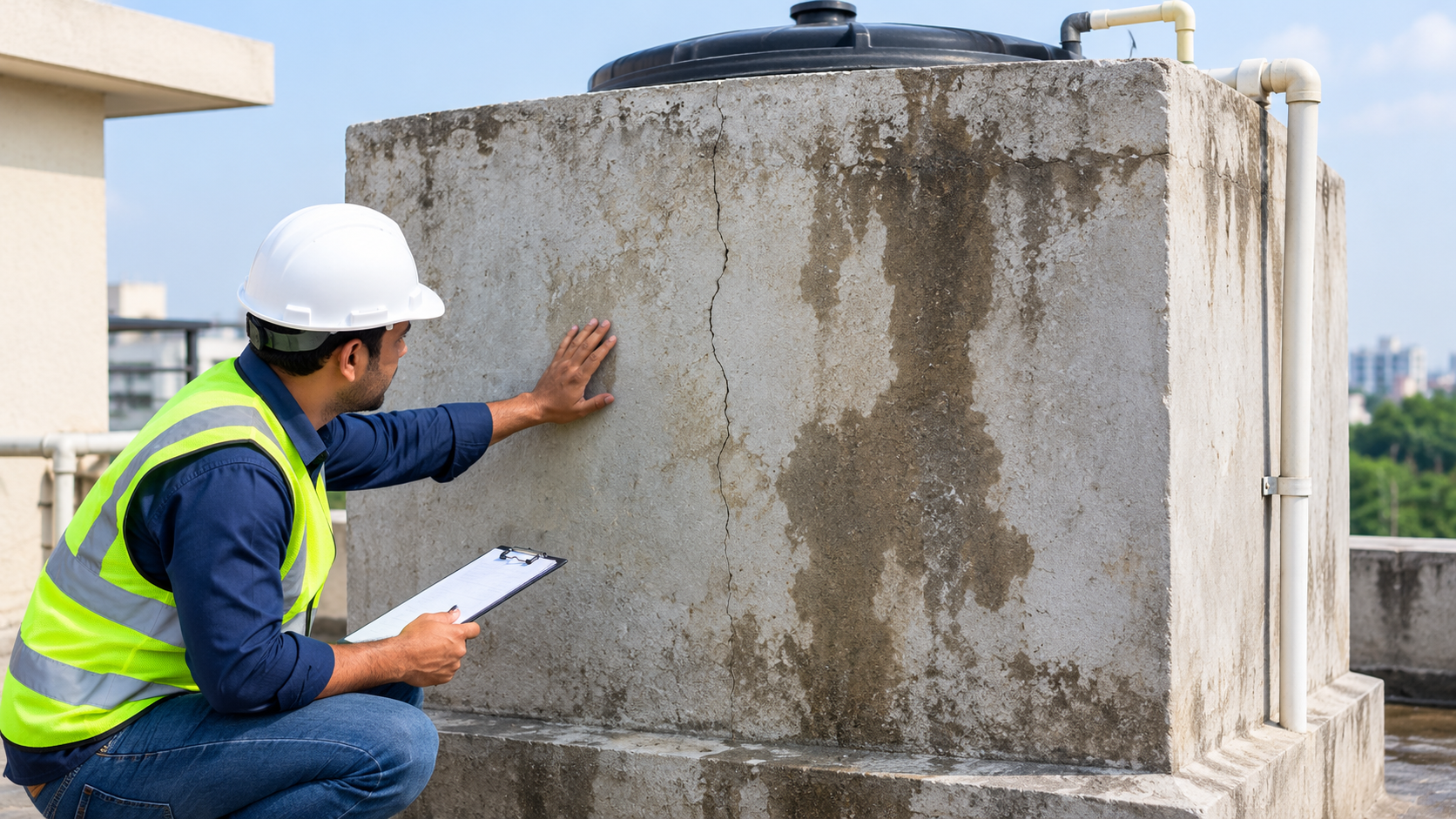
Introduction
A water tank can leak for weeks without anyone noticing. You might see a small damp patch near a bathroom wall, notice that your water bill has suddenly increased, or find that your underground water tank needs refilling more often than usual. These may seem like minor household problems, but they can indicate a hidden leak that needs attention.
Timely water tank leakage repair can prevent water wastage, protect your building’s structure, and help maintain the quality of your stored water. Whether you have an overhead concrete tank in your home or a large underground tank in a residential society or commercial building, identifying the warning signs early can save you from expensive repairs later.
At Faith Infra Projects, we believe that waterproofing is not just about stopping water from escaping. It is about protecting the building, maintaining hygiene, and preventing a small problem from becoming a major maintenance expense.
Why Do Water Tanks Leak in the First Place?
Water tanks are constantly exposed to moisture, pressure, temperature changes, and chemical conditions. Over time, these factors can weaken the tank’s surface and waterproofing layer.
Here are some common causes of water tank leakage.
1. Cracks Caused by Structural Movement
Concrete tanks can develop cracks because of building settlement, temperature fluctuations, shrinkage, or structural movement. Even a hairline crack can allow water to seep through gradually.
2. Poor Construction or Installation
Incorrect concrete mixing, inadequate curing, poorly sealed construction joints, and faulty pipe connections can create weak points. These problems may not become visible until months or years after installation.
3. Chemical Exposure and Surface Deterioration
Chlorinated water and other environmental conditions can contribute to the deterioration of unsuitable coatings and exposed materials over time. If the original waterproofing layer was poorly applied or incompatible with the tank, leakage may eventually occur.
4. Hydrostatic Pressure in Underground Tanks
Underground tanks face pressure from the surrounding soil and groundwater. When groundwater levels rise during the monsoon, external pressure can increase and force water through cracks or construction joints. In some cases, groundwater can also enter the tank, particularly when the internal water level is low.
Understanding the cause is essential because water tank leakage repair should address the underlying problem rather than simply cover the visible crack.
7 Warning Signs You Need Water Tank Waterproofing
A leaking tank does not always produce an obvious stream of water. Sometimes, the first signs appear in a completely different part of your property.
Watch for these seven warning signs.
1. Damp Patches on Nearby Walls or Ceilings
Have you noticed dampness on the wall below an overhead tank or near the room where a tank is installed?
Water can travel through concrete and masonry before appearing on an interior surface. Peeling paint, bubbling plaster, dark patches, and a persistent musty smell may indicate moisture penetration.
However, plumbing leaks and roof seepage can produce similar symptoms. A proper inspection can help determine whether the tank is responsible.
2. Unexplained Increases in Your Water Bill
If your household’s water consumption has remained relatively stable but your water expenses have increased, investigate possible leaks.
A leaking tank may continuously lose water through cracks, joints, or defective pipe connections. The pump may then run more frequently to maintain the required water level.
Before arranging water tank leakage repair, check the float valve, overflow pipe, inlet connections, and other plumbing components. A faulty valve can waste water even when the tank itself is watertight.
3. Murky, Discoloured, or Unpleasant-Smelling Water
Stored water should not develop an unusual colour, smell, or taste.
Cracks, damaged protective coatings, inadequate cleaning, and contamination through defective covers or connections can affect water quality. In underground tanks, groundwater infiltration may introduce soil particles and other contaminants.
If your drinking water becomes cloudy or develops an unusual smell, avoid drinking it until the problem has been investigated and the water is confirmed safe. Waterproofing alone does not make contaminated water safe; proper cleaning, disinfection, and water-quality testing may also be necessary.
4. Damp Soil Around an Underground Tank
One of the clearest warning signs of a possible underground tank leak is a persistently wet patch of soil above or around the tank, particularly during dry weather.
You may also notice unexplained waterlogging, unusual plant growth, or sinking ground near the tank.
These signs are not conclusive because leaking supply pipes, irrigation lines, and groundwater can create similar conditions. Professional underground water tank waterproofing assessments should include checks for these alternative causes.
5. Visible Cracks in the Tank Surface
Inspect accessible concrete surfaces for hairline cracks, wider openings, damaged joints, and areas where the waterproofing layer has separated.
Pay particular attention to corners, pipe penetrations, construction joints, and the junction between the floor and walls. These locations can become vulnerable when materials move or the original sealing work deteriorates.
Do not assume that filling a crack with ordinary cement will solve the problem. The correct water tank leakage repair method depends on the crack’s width, depth, movement, and cause.
6. White Powdery Deposits on Concrete
Have you noticed white, chalk-like marks on the outside of your tank or on nearby walls?
These deposits are often called efflorescence. They form when moisture moves through concrete or masonry, dissolves soluble salts, and carries them to the surface, where the salts remain after the water evaporates.
Efflorescence does not automatically mean the tank is leaking, but it can indicate moisture movement. If the deposits return after cleaning, investigate the source instead of repeatedly removing the white marks.
7. The Tank Needs Refilling More Frequently
If your tank’s water level drops faster than expected, especially when water usage has not changed, there may be a leak.
A simple observation can help: record the water level when consumption is low, avoid drawing water for a reasonable period, and check the level again. Make sure the inlet and outlet conditions are understood before drawing conclusions.
For an underground tank, unexplained water loss deserves particular attention because the leaking water may disappear into the surrounding soil without leaving visible evidence inside the building.
A professional inspection can determine whether you need pipe repairs, joint sealing, crack treatment, or complete water tank waterproofing.
Overhead vs. Underground Water Tank Waterproofing
Not every tank should be repaired using the same method. Its location, construction, water pressure, and intended use all influence the appropriate solution.
Overhead Water Tank Waterproofing
Overhead concrete tanks are exposed to sunlight, temperature fluctuations, and repeated wetting and drying. These conditions can contribute to surface deterioration and cracking.
Common problem areas include:
- Cracks along the tank floor and walls.
- Leaking construction joints and pipe connections.
- Deteriorated internal coatings.
- Water seepage affecting the roof or ceiling below the tank.
Effective overhead water tank waterproofing may involve crack treatment, joint sealing, surface preparation, and a compatible waterproofing system approved for potable-water contact when the tank stores drinking water.
The tank’s structural condition should also be assessed if cracks are widening or concrete is breaking away.
Underground Water Tank Waterproofing
Underground tanks face a different set of challenges because the surrounding soil can remain wet for long periods.
Hydrostatic pressure may push groundwater through defects into the tank. Conversely, stored water may escape through cracks into the soil. In severe cases, groundwater pressure can also affect the tank’s stability when it is empty or nearly empty.
Underground water tank waterproofing may require:
- Repairing cracks and construction joints.
- Sealing pipe penetrations.
- Applying a suitable internal waterproofing system.
- Treating external surfaces where accessible and appropriate.
- Evaluating groundwater pressure and drainage conditions.
When water enters through the walls despite internal repairs, an internal coating alone may not resolve the underlying problem. The repair strategy must account for the direction of water pressure and the condition of the tank structure.
Why Timely Water Tank Leakage Repair Can Save You Thousands
Delaying a repair may seem like a way to save money, but water damage rarely stays confined to one small area.
Protect Your Building’s Structure
Persistent seepage can damage plaster, weaken finishes, corrode embedded steel reinforcement, and contribute to concrete deterioration. If structural reinforcement is affected, repairs can become considerably more complicated and expensive.
Early water tank leakage repair helps limit moisture exposure before damage spreads to surrounding construction.
Reduce Health and Hygiene Risks
Damp surfaces create favourable conditions for mould growth. A leaking or poorly maintained tank can also create opportunities for contamination, particularly when cracks, defective covers, or faulty connections compromise the water supply.
Proper tank cleaning, suitable waterproofing materials, secure covers, and appropriate disinfection all contribute to safer water storage.
Prevent Unnecessary Water Waste
Even a small leak can waste a surprising amount of water when it continues throughout the day. In apartment buildings, hotels, hospitals, and commercial facilities, that waste can add up quickly.
Repairing the source of the leakage helps control water consumption and reduces the burden on pumps and water supply systems.
Avoid Repeated Maintenance Expenses
Painting over a damp patch or applying a temporary sealant may improve the appearance without addressing the actual leak. When the underlying problem remains, the same damage often returns.
A proper inspection followed by the correct repair is usually more useful than repeatedly paying for temporary fixes.
Step-by-Step Water Tank Leakage Repair Process
Professional water tank leakage repair should follow a systematic process. The exact procedure varies depending on the tank material, leak location, structural condition, and whether the water is intended for drinking.
Step 1: Inspect and Identify the Source
The first step is to inspect the tank, surrounding walls, visible plumbing, joints, and pipe penetrations.
For underground tanks, the inspection should also consider groundwater conditions and signs of moisture around the tank. The objective is to distinguish tank leakage from plumbing faults or other sources of seepage.
Step 2: Drain and Clean the Tank Safely
Where necessary, the tank is emptied and its internal surfaces are cleaned to remove sludge, loose material, deposits, and contaminants.
Tank entry can be hazardous because enclosed spaces may contain dangerous atmospheres. Cleaning and inspection inside the tank should be performed by trained personnel using appropriate confined-space precautions.
Step 3: Prepare the Surface and Repair Cracks
Loose concrete, deteriorated coatings, and weak surface material are removed as required. Cracks and joints are then treated using suitable repair materials.
Depending on the defect, the repair may involve cementitious repair mortar, flexible sealants, or specialised injection systems. Moving cracks and structural defects require additional assessment rather than simple surface filling.
Step 4: Apply the Appropriate Waterproofing System
After repairs and surface preparation, a compatible waterproofing coating or membrane is applied according to the manufacturer’s instructions.
For tanks storing drinking water, the selected product must be specifically suitable for potable-water contact under the relevant conditions. Ordinary roof waterproofing products should not automatically be used inside drinking-water tanks.
For underground water tank waterproofing, the system must also suit the expected water pressure and the direction of moisture movement.
Step 5: Allow Proper Curing and Test the Tank
The waterproofing system must cure for the specified period before the tank is refilled. Rushing this stage can compromise the repair.
The completed work should be checked for leakage under appropriate test conditions. The tank should then be cleaned or disinfected as required by the product instructions and applicable water-safety guidance before returning it to service.
A professional should explain the repair method, curing requirements, testing results, and maintenance recommendations.
Frequently Asked Questions About Water Tank Waterproofing
1. Is food-grade waterproofing safe for drinking water tanks?
It can be safe when the product is specifically approved or certified for potable-water contact and is applied according to its instructions. The term “food-grade” alone is not enough to establish suitability. Always verify the manufacturer’s documentation, curing requirements, and any necessary post-application cleaning or disinfection.
2. How often should a water tank be waterproofed?
There is no single fixed interval for every tank. The frequency depends on construction quality, the waterproofing system, water conditions, environmental exposure, and maintenance history. Inspect the tank periodically and arrange a professional assessment if you notice cracks, dampness, unusual water loss, or coating deterioration.
3. Can I repair a leaking underground water tank myself?
Minor accessible issues, such as a faulty external pipe connection, may be manageable for someone with the right skills. However, underground tank leakage can involve hidden cracks, groundwater pressure, or structural defects. Professional underground water tank waterproofing is generally advisable when the source is uncertain or the leak persists. Never enter an underground tank without proper confined-space safety measures.
4. Which waterproofing material is best for a water tank?
The best material depends on the tank’s construction, the size and movement of cracks, water pressure, and whether the tank stores drinking water. Cementitious waterproofing systems, flexible coatings, and specialised crack-injection products may be appropriate in different situations. Any coating in contact with drinking water must be suitable for potable-water use.
5. How can I tell whether my tank or its plumbing is leaking?
Check for overflowing water, faulty float valves, leaking inlet and outlet pipes, and visible damage around connections. You can also monitor the water level when water consumption is minimal, provided the inlet and outlet conditions are controlled. If water loss continues without an obvious plumbing fault, arrange an inspection to identify the source.
Conclusion: Fix Water Tank Leaks Before They Spread
A leaking water tank can affect much more than your water supply. It can damage walls, compromise concrete, waste valuable water, and create conditions that affect hygiene.
The important thing is to recognise the early warning signs. Damp patches, recurring efflorescence, unexplained water loss, and persistent wet soil around an underground tank should not be ignored.
Whether you need overhead water tank waterproofing, underground water tank waterproofing, or a targeted water tank leakage repair, the right solution starts with identifying the cause and selecting a suitable repair system.
Concerned about a leaking water tank at your home, apartment complex, or commercial property?
Contact Faith Infra Projects to discuss your waterproofing requirements and arrange an assessment. Our team can help identify the likely source of leakage, recommend an appropriate repair approach, and help protect your property from avoidable water damage.
Don’t wait for a small leak to become a costly repair. Early action can make all the difference.
📞 Call us today at +91 9205955008 or visit www.faithinfraprojects.com to schedule your site inspection.