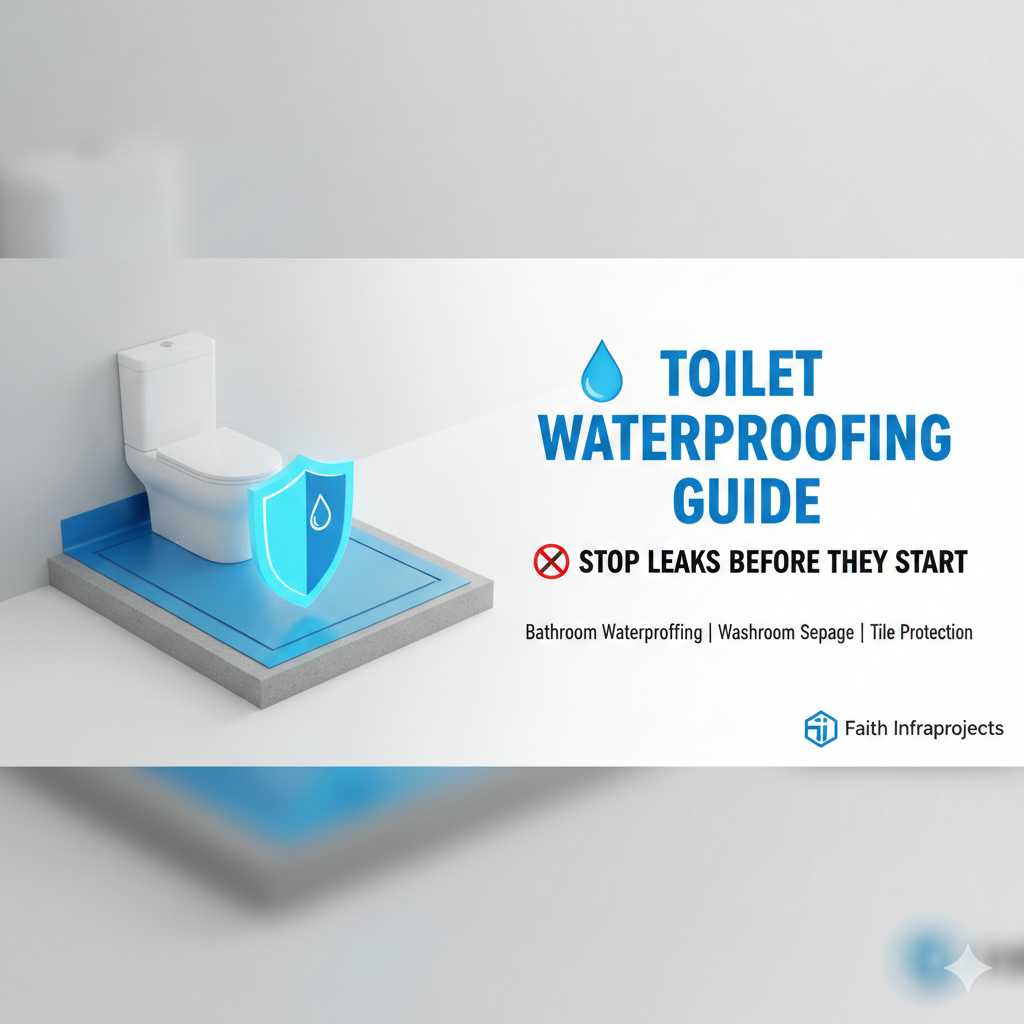
The Ultimate Guide to Preventing Costly Bathroom Damage
Leaks in your toilet or bathroom area are more than just a minor inconvenience; they are silent destroyers that can lead to extensive and expensive damage to your home’s structure, ceiling, and finishes. If you’re a homeowner, property manager, or builder, finding a reliable toilet waterproofing solution isn’t just a good idea—it’s absolutely essential.
Welcome to the ultimate, layman-friendly guide that will walk you through everything you need to know about proactive toilet waterproofing. Our goal is to equip you with the knowledge to stop leaks before they start and secure the longevity of your property.
🚽 Problem Overview: Why Leaks Are So Hard to Find
The struggle is real. By the time you notice a visible stain on the ceiling below your bathroom, the water has often been leaking for weeks or even months. The complexity of the modern bathroom makes finding the source of the leak a frustrating experience.
Common Issues Related to Leaks
- Invisible Intrusion: Water doesn’t always flow straight down. It travels along pipes, through masonry, and across beams, making the ceiling stain appear far away from the actual leak source. Is it the toilet base? A cracked pipe? Or failure of the water proofing for bathroom itself?
- Failed Grout and Seals: Over time, the grout between your tiles and the silicone seals around the shower and toilet flange degrade. These tiny cracks and holes are often the first points of failure, letting water seep into the sub-floor unnoticed.
- Subpar Installation: In many older properties, the original washroom waterproofing was either poorly executed or skipped entirely, relying only on cement and tile. This is a ticking time bomb, as cement is porous and not a true waterproofing barrier.
- The Toilet Base Vulnerability: The area where the toilet bowl meets the finished floor is a critical junction. Movement, poor installation of the wax ring, or a failure of the surrounding sealant can allow sewage water to slowly escape, leading to serious hygiene and structural issues.
🛡️ Why Professional Waterproofing Is Essential
Thinking of skipping professional bathroom waterproofing to save a few dollars? That decision could cost you tens of thousands later. Waterproofing is the single most important defense against water damage in one of the wettest areas of your house.
The Benefits of Proactive Waterproofing
1. Structural Integrity and Safety
Water penetrating the concrete slab or wooden sub-floor can weaken the structural components of your home. It can lead to the corrosion of steel reinforcement within concrete (concrete cancer) or cause wooden beams to rot, compromising the safety of the entire building. Professional, high-grade bathroom waterproofing creates an impenetrable barrier that protects your foundation.
2. Mold and Mildew Prevention
Moisture trapped within walls and beneath floors creates the perfect breeding ground for mold and mildew. These not only smell terrible but can also pose significant health risks, particularly to those with respiratory issues. A proper waterproofing membrane eliminates the damp environment required for fungal growth.
3. Protecting Your Aesthetic Investments
You chose beautiful tiles and fixtures. A leak can cause your expensive floor and wall tiles to loosen, crack, or become stained by efflorescence (white, powdery mineral deposits). Effective bathroom tile waterproofing safeguards your investment in the bathroom’s aesthetics.
4. Avoiding Neighbor Disputes (In Apartments)
If you live in an apartment or condo, a leak from your bathroom will quickly become your downstairs neighbor’s problem. Professional waterproofing prevents ceiling damage to the unit below, saving you from stressful and costly liability and repair negotiations.
In short, comprehensive waterproofing is not an expense—it’s an insurance policy that guarantees peace of mind and significantly enhances the long-term value of your property.
🛠️ Methods, Materials, and the Process of Professional Waterproofing
Choosing the right water proofing for bathroom application is crucial. A professional service, like those offered by Faith Infraprojects, assesses the age of your property, the nature of the leak (if any), and the sub-surface material (concrete or wood) to recommend the most effective method.
Key Types of Waterproofing for Washrooms
Here are the most common and effective materials used for robust washroom waterproofing:
| Waterproofing Method | Description | Key Advantage | Best For |
| 1. Cementitious Coating | A mixture of cement, sand, and polymer additives. It’s applied in slurry form, usually in two coats. | Durable, rigid, easy to apply, and compatible with most building materials. | New construction, water tanks, and areas requiring a solid, rigid layer. |
| 2. Elastomeric Liquid Membrane | A liquid rubber-like substance (often acrylic or modified bitumen) that cures into a highly elastic and seamless membrane. | Excellent flexibility (can stretch up to 280%) and crack-bridging capability. | Existing bathrooms, balconies, and areas prone to slight structural movement. |
| 3. Polyurethane (PU) Membrane | A premium, liquid-applied membrane that offers superior durability and seamless protection. It forms a thick, highly resilient, and flexible layer. | Extremely long-lasting, excellent chemical resistance, and forms a truly seamless barrier. | Flat roofs, sunken areas, and high-stakes toilet waterproofing projects. |
| 4. Epoxy Resin Coating (Non-Hacking) | A resin and hardener mixture applied directly over existing tiles. | No demolition (non-hacking) required, fast application, durable, and highly cost-effective for repairs. | Repairing leaks in tiled bathrooms without major renovation. |
The Step-by-Step Professional Waterproofing Process
A reliable bathroom waterproofing job follows a meticulous, multi-step process to ensure a long-lasting seal. This is where professional expertise truly makes the difference.
Step 1: Surface Preparation is Paramount
This is the most critical step. If the membrane doesn’t bond properly, it will fail.
- Hacking/Demolition (if required): For new installations or major repairs, all existing tiles, screed, and loose material are removed down to the concrete slab.
- Cleaning: The surface must be thoroughly cleaned to remove all dust, oil, grease, paint, and curing compounds.
- Repairing Cracks and Voids: All visible cracks, honeycombs, and holes in the concrete slab are repaired and filled using specialized non-shrink grouts or repair mortars.
Step 2: Joint and Critical Area Sealing
Bathrooms are full of weak points. These areas are addressed first:
- Pipe Penetrations: The junctions where pipes penetrate the floor slab (drain, inlet, and toilet flange) are sealed with non-shrink grout and then reinforced with waterproof sealants or fabric tapes.
- Wall-Floor Junctions: The corners where the floor meets the walls are treated with a flexible corner-coving or special reinforcing fabric embedded in the first waterproofing coat. This prevents failure due to movement between the slab and wall.
Step 3: Application of the Waterproofing Membrane
The chosen material is now applied in multiple coats:
- Priming: A primer is applied to enhance the adhesion between the concrete substrate and the main waterproofing coating.
- First Coat: The first layer of the chosen membrane (e.g., Polyurethane or Cementitious Slurry) is applied evenly to the floor and extended up the walls (a minimum of 6 to 12 inches) to create a ‘bath-tub’ effect.
- Second Coat: After the required curing time (usually 24 hours), a second coat is applied, often perpendicular to the first coat, to ensure uniform thickness and eliminate any pinholes or missed spots.
Step 4: Curing and The Flood Test
Patience is key for maximum durability.
- Curing: The waterproofing membrane is allowed to fully cure as per the manufacturer’s specifications (this can range from 24 hours to 7 days).
- Water Ponding Test: A professional contractor will always perform a crucial test by plugging the drain and filling the waterproofed area with water for a specified period (typically 24 to 48 hours). The slab underneath is then checked for any sign of dampness or leakage. This proves the system works before the tiles are laid.
Step 5: Protection and Tiling
- Protective Screed: Once the system passes the test, a thin, protective layer of mortar or screed (often containing an integral waterproofing compound) is applied over the membrane to shield it from puncture or damage during the tiling process.
- Tiling: Finally, the floor and wall tiles are laid using a high-quality, waterproof-grade tile adhesive and grout. This contributes to the overall bathroom tile waterproofing.
Following this comprehensive process ensures that your toilet waterproofing is robust, durable, and leak-free for years to come.
🏆 Choosing the Right Waterproofing Company
The quality of your toilet waterproofing ultimately depends on the skill and integrity of the people installing it. A shoddy job can lead to a recurring leak just a year or two down the line. Don’t base your decision solely on the cheapest quote.
5 Factors to Vet Your Waterproofing Partner
When seeking solutions for water proofing for bathroom or a full washroom waterproofing overhaul, ask these questions:
1. Experience and Specialization
Does the company specialize in solving complex water ingress issues? Experience in handling diverse problems—from foundation seepage to high-rise balcony leaks—shows they understand the nuances of water behavior. An experienced team will perform a detailed inspection to correctly diagnose the source of the leak, which is half the battle won.
2. Materials and Techniques Used
Ask about the specific materials they plan to use. Are they using generic cement compounds, or premium, certified materials like Polyurethane or high-flexibility elastomeric membranes? A reliable contractor will transparently explain why their chosen material is the best fit for your structure and the particular challenge of bathroom tile waterproofing. They should be able to show proof of material quality and adherence to industry standards.
3. Warranty and After-Sales Support
A professional waterproofing job must come with a comprehensive warranty on the workmanship and materials. Reputable companies will offer a warranty period—often ranging from 5 to 10 years—that gives you genuine peace of mind. Check what the warranty covers and what steps they take if a leak re-emerges during that period. This commitment is a hallmark of a trustworthy partner.
4. Reputation and Local Presence
Look for customer reviews and testimonials, particularly from clients who had their work done several years ago. For homeowners and builders in areas like Noida, Delhi NCR, selecting a company with a strong local presence is key for quicker service response times and familiarity with local building codes and soil conditions.
5. Transparency in the Process (The Flood Test)
Insist that your contractor includes the water ponding test in their service plan. As detailed earlier, this is the only way to scientifically prove the waterproofing membrane is successful before the tiles are laid. A contractor who skips this vital step is cutting corners.
⭐ Why Trust Faith Infraprojects? (Soft Promotion)
If you are looking for specialized, long-lasting solutions for your toilet waterproofing in Noida, Delhi NCR, and surrounding areas, consider partnering with Faith Infraprojects. They understand that a high-quality job is about more than just applying a coat; it’s about meticulous preparation, using advanced materials, and following a rigorous, proven process—including the essential flood test—to guarantee that leaks are stopped before they have a chance to start.
💰 Cost Factors: Understanding Your Waterproofing Investment
While quality waterproofing is an investment, not an expense, it helps to understand what drives the final cost. Be prepared to compare detailed quotes, not just the final number.
What Influences the Cost of Toilet Waterproofing?
- The Chosen Method and Material: Polyurethane (PU) systems are often more expensive than basic cementitious slurries but offer superior flexibility and longevity. For a premium, lasting washroom waterproofing, the material cost will be higher, but the long-term value is incomparable.
- The Scope of Work (Hacking vs. Non-Hacking):
- Hacking/Demolition: Removing all existing tiles and screed is more labor-intensive and creates debris, increasing both cost and project time.
- Non-Hacking Repair: Applying an epoxy or high-performance coating directly over existing tiles is faster and cheaper, but only feasible if the sub-floor structure is still sound and the current leak is minor.
- Size and Complexity: Naturally, larger bathroom areas and those with numerous pipe penetrations, sunken tubs, or complex geometry (like multiple corners and niches) require more labor and material for effective sealing.
- Location and Accessibility: Projects in high-rise buildings or those with difficult access may incur higher labor and logistical costs.
- Severity of Damage: If the leak has already damaged the underlying concrete or steel reinforcement, the contractor must first perform structural repair (concrete patching, anti-corrosion treatment) before waterproofing, significantly increasing the cost.
Pro-Tip: Always ask for a detailed Bill of Quantities (BOQ) that breaks down the cost of preparation, materials (including brand and quantity), labor, and the warranty. This ensures you are comparing apples to apples across different contractors.
💡 Maintenance Tips: Ensuring Your Waterproofing Lasts
Professional toilet waterproofing provides the foundation, but long-term maintenance is your responsibility to ensure the barrier lasts its full lifespan—often a decade or more. A little proactive care goes a long way in preventing future leaks.
Simple Steps for Long-Lasting Waterproofing Protection
1. Inspect and Re-Seal Grout and Joints Regularly
The weakest link in any bathroom is the sealant (silicone/caulk) around the toilet base, shower screen, sink, and the grout between the bathroom tiles.
- The Check: Once every six months, look closely for any signs of cracking, peeling, or darkening/discoloration in the sealant and grout.
- The Fix: If you spot cracked grout or peeling silicone, address it immediately. Remove the old sealant, thoroughly clean the joint, and reapply a high-quality, mold-resistant silicone or epoxy grout.
2. Ensure Excellent Ventilation
Humidity and condensation are enemies of waterproofing materials and surrounding finishes.
- Action: Always use the exhaust fan during and for at least 15–20 minutes after showering. If possible, open a window to allow steam and moisture to escape.
- Benefit: Reducing humidity prevents mold growth on ceilings and walls, and minimizes moisture absorption by the porous cementitious materials surrounding your water proofing for bathroom membrane.
3. Address Plumbing Leaks Immediately
Even a perfectly installed waterproof membrane cannot withstand a high-pressure pipe leak.
- Action: Be vigilant for dripping faucets, running toilets, or dampness around the base of the toilet.
- Tip: Fix any minor plumbing issue the moment it’s discovered. A perpetually wet sub-floor will quickly test the limits of your waterproof barrier.
4. Maintain Proper Drainage Slope
Preventing standing water is crucial. Water that pools takes longer to evaporate and increases the hydrostatic pressure on your washroom waterproofing system.
- Action: Clear hair and soap scum from floor drains regularly to ensure water flows freely and quickly to the drain.
- Prevention: Avoid placing heavy, concentrated loads on the floor that could compromise the screed/tile slope.
❓ FAQ Section: Your Quick Guide to Toilet Waterproofing
Q1: How do I know for sure that my leak is coming from the toilet or the floor?
A: Professional leak detection is key. An expert from a company like Faith Infraprojects uses specialized non-destructive tools (like moisture meters, thermal imaging cameras, or pressure testing equipment) to trace the moisture path back to the source. The most reliable method is the Water Ponding Test (filling the area with water and monitoring for seepage) after isolating the plumbing lines to rule out pipe issues.
Q2: Is there a way to do toilet waterproofing without breaking the existing tiles (Non-Hacking)?
A: Yes, the non-hacking method is a highly popular and cost-effective repair solution. It typically involves specialized treatments like Epoxy Grouting (sealing all grout lines and joints with an impermeable epoxy resin) or applying a clear, high-performance liquid waterproof coating directly over the existing bathroom tile waterproofing system. This method is faster and minimizes disruption.
Q3: How long does professional water proofing for bathroom typically last?
A: A high-quality, professionally installed waterproofing membrane (like a Polyurethane system) can last for 10 to 15 years or even longer. Durability depends on the material quality, meticulous surface preparation, and the maintenance practices followed by the homeowner. Always choose a contractor who offers a long-term warranty.
Q4: Why is it important to waterproof the walls and not just the floor?
A: Water doesn’t just flow down; it splashes and gets absorbed by walls, especially in the shower area and the wall behind the toilet. The first few feet of the wall and the wall-floor junction are high-risk zones. Proper washroom waterproofing requires extending the membrane up the walls (a process called ‘upturn’ or ‘coving’) to create a complete, monolithic ‘bathtub’ seal that contains all moisture.
Q5: What is the biggest mistake homeowners make regarding bathroom waterproofing?
A: The biggest mistake is either skipping waterproofing in new construction to save costs, or delaying repairs when the first sign of a leak appears. Ignoring minor issues allows water to penetrate the structure, leading to exponential damage and vastly higher repair costs down the line.
✅ Conclusion: Secure Your Property Today
The integrity of your home relies heavily on its ability to manage water, and nowhere is this more true than in the bathroom. Proactive toilet waterproofing is not just a repair job; it is a critical investment that protects your structural foundation, preserves your aesthetics, and safeguards your family’s health from mold and mildew.
You now understand the problem, the professional process, and the signs of failure. The time to act is now, well before that hidden leak turns into a costly collapse or a major renovation nightmare.
If you are a homeowner or builder in Noida, Delhi NCR, and are seeking permanent, certified solutions for bathroom tile waterproofing or any complex leak issue, you need a partner with proven expertise and robust materials.
Don’t wait for the leak to start damaging your home.
Contact Faith Infraprojects today. Their team of certified experts specializes in comprehensive, warranty-backed water proofing for bathroom and washroom systems, ensuring your property is protected with the highest quality standards.
Call Faith Infraprojects for a thorough inspection and a long-term waterproofing solution that stops leaks before they start!