
Introduction
Water leakage is one of the most common and frustrating problems faced by homeowners and property managers in India. Whether it’s a damp wall, a leaking roof, or water seeping into your basement, these issues not only damage your property but also affect your health and comfort.
That’s where liquid rubber waterproofing comes in — a modern, highly effective solution that is quickly replacing traditional waterproofing methods. Unlike old membrane systems that can crack, peel, or fail over time, liquid rubber creates a seamless, flexible, and long-lasting protective layer.
In this detailed guide, we’ll explain everything you need to know about liquid rubber waterproofing, how it works, its benefits, and why it’s becoming the preferred choice for roof waterproofing and other applications.
Common Problems with Traditional Waterproofing Membranes
Before we understand why liquid rubber waterproofing is better, let’s first look at the issues with traditional waterproofing systems.
1. Joint Failures and Leakage
Traditional membranes (like bitumen sheets or APP membranes) are installed in layers with joints. Over time, these joints become weak points where water can seep in.
2. Cracking Due to Temperature Changes
In Indian weather conditions, especially in cities like Noida and Delhi NCR, extreme heat and seasonal temperature variations cause expansion and contraction. This often leads to cracks in traditional membranes.
3. Difficult Installation
Sheet-based waterproofing systems require heat application (torch method), skilled labor, and precise installation. Any small mistake can result in failure.
4. Limited Flexibility
Traditional membranes lack flexibility. When the building structure shifts slightly, the membrane may tear or lose adhesion.
5. Frequent Maintenance
These systems require regular repairs and maintenance, increasing long-term costs.
Why Waterproofing Is Essential for Every Property
Waterproofing is not just an optional upgrade — it’s a necessity.
Protects Structural Integrity
Water seepage weakens concrete and steel reinforcement over time, leading to structural damage.
Prevents Dampness and Mold
Moisture leads to fungus and mold growth, which can cause respiratory problems and allergies.
Saves Money in the Long Run
Investing in a good waterproofing coating today can prevent expensive repairs in the future.
Increases Property Value
A well-maintained, waterproofed property has higher resale and rental value.
Improves Indoor Comfort
No more peeling paint, damp smells, or water stains — just a clean and healthy living space.
What Is Liquid Rubber Waterproofing?
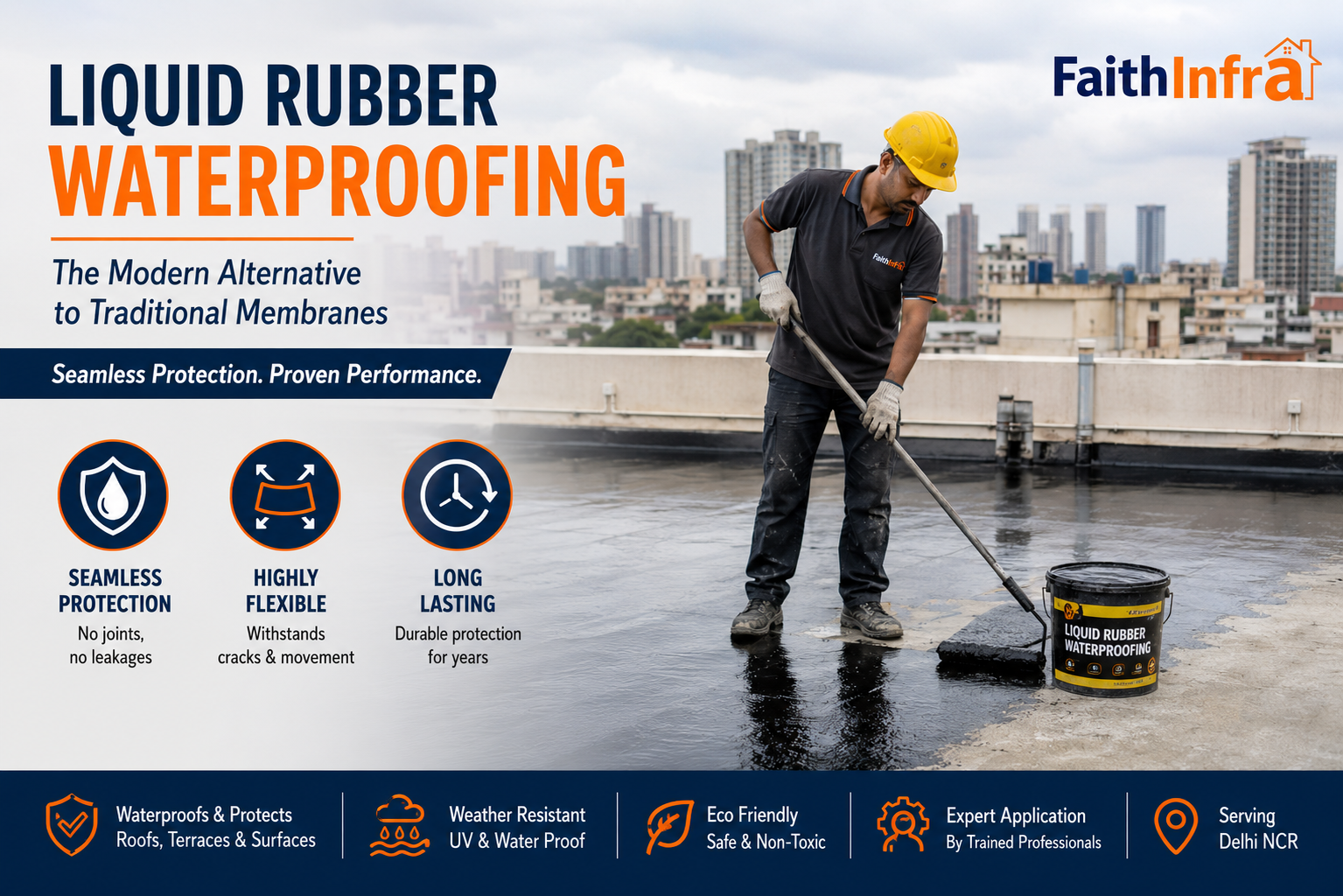
Liquid rubber waterproofing is an advanced liquid waterproofing solution that forms a seamless, elastic, and durable coating over surfaces.
It is typically applied as a liquid and then cures into a rubber-like membrane that:
- Has no joints or seams
- Is highly flexible
- Adheres strongly to surfaces
- Provides complete water protection
This makes it ideal for roof waterproofing, terraces, bathrooms, basements, and more.
How Liquid Rubber Waterproofing Works
The process is simple but highly effective:
- The liquid is applied using a brush, roller, or spray
- It spreads evenly across the surface
- It fills cracks and gaps
- It cures into a flexible rubber membrane
The result is a continuous waterproof barrier that prevents water from entering the structure.
Types of Liquid Rubber Waterproofing Systems
There are different types of liquid rubber and related waterproofing systems available:
1. Pure Liquid Rubber Coating
This is the most advanced type, offering high flexibility and durability. It is perfect for roofs and terraces.
2. Acrylic Waterproofing Coating
A cost-effective option suitable for moderate waterproofing needs.
3. Polyurethane (PU) Waterproofing
Also known as pu waterproofing coating, this is highly durable and resistant to chemicals and weather conditions.
4. Bitumen-Based Liquid Waterproofing
A modern alternative to traditional bitumen sheets, offering better flexibility.
Advantages of Liquid Rubber Waterproofing
1. Seamless Protection
Unlike traditional membranes, there are no joints where water can leak.
2. High Flexibility
It can stretch and adapt to structural movements without cracking.
3. Long Lifespan
Liquid rubber waterproofing systems last longer compared to conventional methods.
4. Easy Application
No need for heavy equipment or heat application — making it safer and faster.
5. Excellent Adhesion
It bonds well with concrete, metal, wood, and other surfaces.
6. UV and Weather Resistant
Perfect for Indian climates with harsh sunlight and heavy rains.
7. Eco-Friendly Option
Many liquid waterproofing solutions are low in VOCs and environmentally friendly.
Applications of Liquid Rubber Waterproofing
Liquid rubber waterproofing is versatile and can be used in various areas:
Roof Waterproofing
One of the most popular uses. It provides long-term protection against rainwater and heat.
Terrace Waterproofing
Prevents water accumulation and leakage into lower floors.
Bathroom Waterproofing
Stops water seepage into walls and adjacent rooms.
Basement Waterproofing
Protects against groundwater pressure and dampness.
External Walls
Acts as a protective waterproofing coating against rainwater.
Liquid Rubber Waterproofing vs Traditional Membranes
| Feature | Liquid Rubber Waterproofing | Traditional Membranes |
| Joints | Seamless | Multiple joints |
| Flexibility | High | Low |
| Installation | Easy | Complex |
| Durability | Long-lasting | Moderate |
| Maintenance | Low | High |
| Leak Risk | Minimal | High |
Clearly, liquid rubber waterproofing is a more reliable and modern solution.
Step-by-Step Application Process
Here’s how professionals apply liquid rubber waterproofing:
1. Surface Preparation
Cleaning the surface and removing dust, oil, and loose particles.
2. Crack Filling
Repairing visible cracks and damaged areas.
3. Primer Application
Applying a primer to improve adhesion.
4. Liquid Rubber Coating
Applying the main waterproofing coating evenly.
5. Multiple Layers
Adding additional coats for enhanced protection.
6. Curing
Allowing the coating to dry and form a rubber membrane.
Choosing the Right Waterproofing Company
Selecting the right contractor is just as important as choosing the right material.
What to Look For:
- Experience in liquid waterproofing
- Use of high-quality materials
- Skilled technicians
- Warranty on services
- Positive customer reviews
Why Choose Faith Infraprojects?
Faith Infraprojects is a trusted name for waterproofing services in Noida and Delhi NCR. With years of experience and a commitment to quality, they offer:
- Advanced liquid rubber waterproofing solutions
- Expert inspection and consultation
- Professional execution
- Long-lasting results
They understand local climate challenges and provide customized solutions for every property.
Cost Factors of Liquid Rubber Waterproofing
The cost of liquid rubber waterproofing depends on several factors:
Area Size
Larger areas may reduce cost per square foot.
Surface Condition
Damaged surfaces require more preparation work.
Material Type
Premium coatings cost more but last longer.
Number of Layers
More layers provide better protection but increase cost.
Labor Charges
Experienced professionals may charge more but ensure quality work.
Maintenance Tips for Long-Lasting Waterproofing
To ensure your waterproofing lasts for years:
- Inspect your roof before and after the monsoon
- Keep drainage systems clean
- Avoid water stagnation
- Repair small cracks immediately
- Schedule professional inspections periodically
FAQ: Liquid Rubber Waterproofing
1. What is liquid rubber waterproofing?
Liquid rubber waterproofing is a liquid-applied coating that forms a seamless, flexible, and waterproof membrane after curing.
2. Is liquid rubber better than traditional waterproofing membranes?
Yes, it offers better flexibility, no joints, and longer durability compared to traditional membrane systems.
3. Where can liquid waterproofing be used?
It can be used on roofs, terraces, bathrooms, basements, and walls.
4. How long does liquid rubber waterproofing last?
With proper application and maintenance, it can last 10–15 years or more.
5. Is PU waterproofing coating the same as liquid rubber?
Not exactly. PU waterproofing coating is a type of liquid waterproofing, but liquid rubber offers higher elasticity and seamless protection.
6. How much does roof waterproofing cost in India?
The cost varies depending on area, material, and condition, but liquid rubber is considered cost-effective in the long run.
Conclusion
Waterproofing is one of the smartest investments you can make for your property. With modern solutions like liquid rubber waterproofing, you no longer have to rely on outdated methods that fail over time.
This advanced waterproofing coating offers seamless protection, high flexibility, and long-term durability — making it the ideal choice for roof waterproofing and other applications.
If you’re looking for reliable and professional waterproofing services in Noida or Delhi NCR, Faith Infraprojects can help you with expert solutions tailored to your needs.
👉 Don’t wait for leaks to become a major problem. Protect your property today with the power of liquid waterproofing and enjoy peace of mind for years to come.
Don’t wait for the leak to start damaging your home.
Contact Faith Infraprojects today. Their team of certified experts specializes in comprehensive, warranty-backed water proofing for bathroom and washroom systems, ensuring your property is protected with the highest quality standards.
Call Faith Infraprojects for a thorough inspection and a long-term waterproofing solution that stops leaks before they start!