

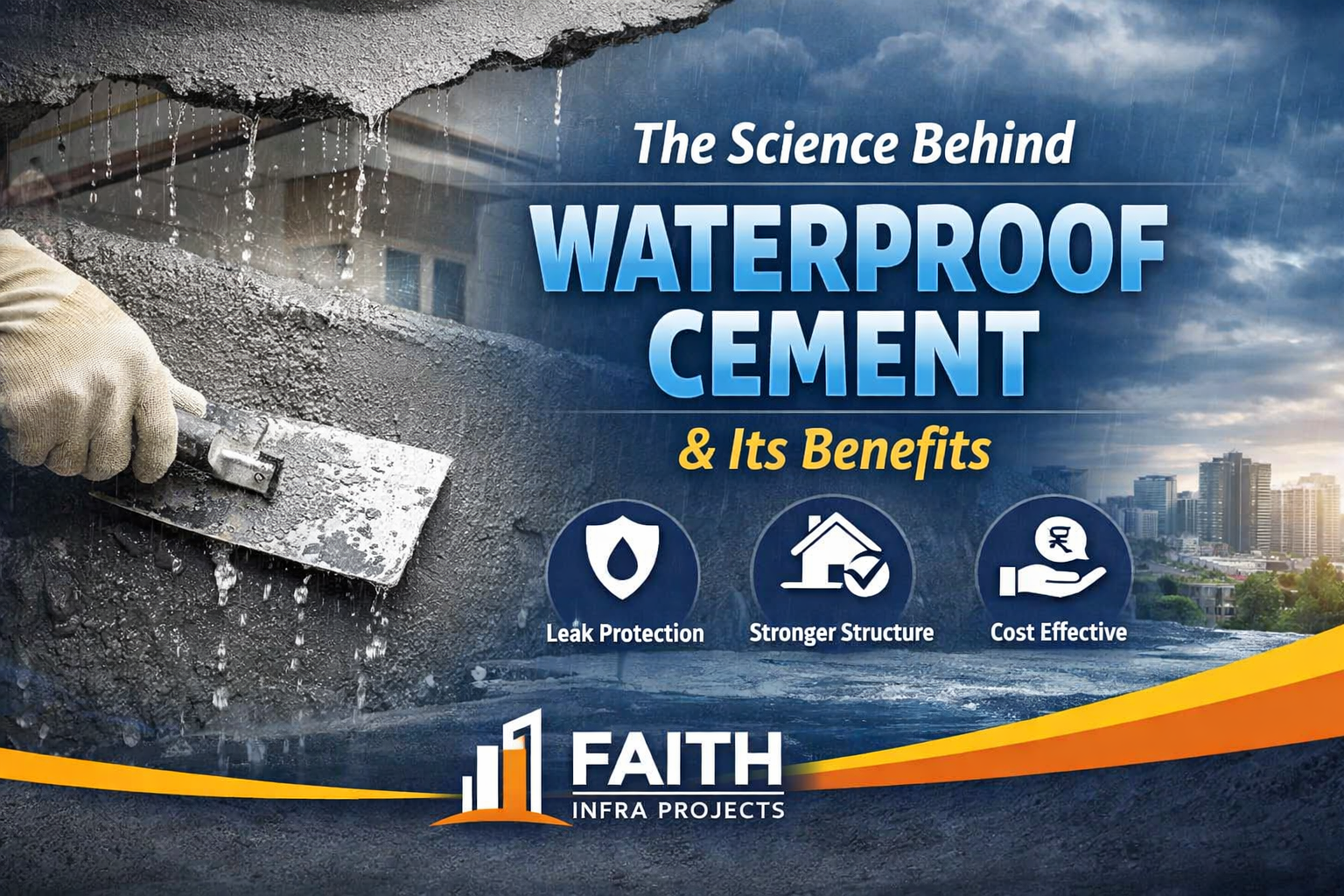
Water leakage is one of the most common problems faced by homeowners in India. Whether it’s a damp wall, a leaking terrace, or water seeping through concrete during the monsoon, moisture can slowly damage your home’s structure. This is where waterproof cement plays a vital role.
Modern construction is no longer just about building strong walls and roofs. Today, builders also focus on protecting structures from water damage. Waterproofing technology has improved significantly, and waterproofing cement is one of the most reliable solutions used in construction and renovation.
In this detailed guide, we will explain the science behind waterproofing cement, how it works, its major benefits, and why professional waterproofing services can help protect your property for years.
Understanding Waterproof Cement
What Is Waterproof Cement?
It is a special type of cement that is designed to resist water penetration. It contains special additives or chemicals that reduce the permeability of concrete and prevent water from entering the structure.
In traditional cement, tiny pores and capillaries allow water to pass through slowly. Over time, this can lead to cracks, dampness, and structural damage. Waterproofing cement modifies the internal structure of concrete to block these water pathways.
As a result, the concrete becomes more durable and resistant to moisture.
The Science Behind Waterproof Cement
The effectiveness of waterproof cement lies in its chemical composition.
Concrete naturally contains microscopic pores where water can travel. Waterproof cement works through the following scientific mechanisms:
1. Reduced Porosity
Special additives fill microscopic gaps in the cement structure. This reduces the size and number of pores inside the concrete.
Less porosity means water cannot easily penetrate the material.
2. Hydrophobic Chemicals
Some waterproof cement contains hydrophobic (water-repelling) compounds. These chemicals create a protective layer that prevents water absorption.
3. Crystalline Technology
Advanced waterproofing cement may use crystalline compounds. When water enters the concrete, these crystals grow and block the pores.
This process effectively seals the concrete from inside.
4. Improved Bonding Strength
Waterproof cement also improves bonding between particles in the concrete mix. This leads to stronger, more compact concrete that resists cracking.
Together, these processes create water resistant concrete that can withstand moisture exposure for years.
Common Problems Caused by Water Leakage
Before understanding the benefits of waterproof cement, it’s important to recognize the problems caused by water infiltration.
1. Damp Walls
Water seepage often causes walls to become damp. This leads to peeling paint, stains, and mold growth.
2. Structural Damage
Moisture can weaken steel reinforcement inside concrete. Over time, corrosion may reduce the structural strength of the building.
3. Mold and Health Issues
Damp environments encourage mold growth. Mold can cause allergies, breathing problems, and other health concerns.
4. Cracks in Concrete
When water enters concrete and expands due to temperature changes, cracks can form. These cracks allow even more water to enter.
5. Roof Leakage
Poor waterproofing can lead to terrace and roof leaks, especially during heavy rainfall.
Proper slab waterproofing and concrete waterproofing help prevent these problems.
Why Waterproofing Is Essential for Buildings
Waterproofing is not just an optional upgrade—it is an essential part of modern construction.
Protects Structural Integrity
Water can slowly weaken concrete structures. Waterproof cement prevents moisture from entering and damaging the building.
Extends Building Life
A properly waterproofed structure can last decades longer without major repairs.
Prevents Expensive Repairs
Fixing water damage later can be costly. Waterproofing early helps avoid expensive restoration work.
Improves Indoor Air Quality
By preventing dampness and mold growth, waterproofing creates a healthier living environment.
Increases Property Value
A well-maintained, waterproof property is more attractive to buyers and tenants.
This is why many builders now rely on water resistant concrete and specialized waterproofing coating systems.
Methods of Waterproofing Using Waterproof Cement
There are several techniques used to apply waterproof cement and protect concrete surfaces.
1. Integral Waterproofing
In this method, waterproofing chemicals are mixed directly into the cement during construction.
This creates water resistant concrete from the start and protects the structure internally.
Advantages
- Long-term protection
- Even distribution of waterproofing material
- Stronger concrete mix
This method is commonly used in foundations, basements, and water tanks.
2. Cementitious Waterproofing
Cement-based waterproofing is one of the most widely used methods.
A waterproofing coating made from cement and special polymers is applied to surfaces like:
- Bathrooms
- Balconies
- Roof slabs
- Water tanks
The coating forms a strong barrier that blocks water infiltration.
3. Slab Waterproofing
Terraces and roofs are the most exposed parts of any building.
Slab waterproofing involves applying waterproof cement coatings or membranes on the roof slab.
This prevents rainwater from entering the structure.
Common steps include:
- Cleaning the slab surface
- Repairing cracks
- Applying waterproof cement slurry
- Adding protective coatings
4. Concrete Waterproofing with Additives
In this method, chemical waterproofing compounds are added to concrete.
These additives react with cement to reduce water absorption and improve durability.
This technique is often used for:
- Basements
- Parking areas
- Swimming pools
- Water storage tanks
5. Multi-Layer Waterproofing Systems
For areas with severe water exposure, contractors may use multiple waterproofing layers.
This system combines:
- Waterproof cement
- Polymer coatings
- Protective membranes
The result is highly effective concrete waterproofing.
Benefits of Waterproof Cement
Using waterproof cement offers many advantages for homeowners and builders.
1. Long-Term Water Protection
The biggest advantage is its ability to prevent water seepage and leakage.
This protects walls, roofs, and foundations from moisture damage.
2. Stronger Concrete Structure
Waterproof cement improves the density of concrete.
Denser concrete means higher durability and better structural strength.
3. Reduced Maintenance
Buildings constructed with waterproof cement require fewer repairs related to water damage.
This saves money in the long run.
4. Prevents Mold and Dampness
Waterproofing eliminates moisture accumulation, which reduces mold growth.
This helps maintain a healthier indoor environment.
5. Ideal for Harsh Weather Conditions
In regions with heavy rainfall like Delhi NCR, waterproof cement provides reliable protection against seasonal leaks.
6. Cost-Effective Solution
Although waterproofing may involve an initial investment, it prevents expensive repairs later.
For many property owners, this makes waterproof cement a cost-effective solution.
Choosing the Right Waterproofing Company
Selecting the right waterproofing contractor is just as important as choosing the right materials.
Here are some factors to consider.
Experience and Expertise
A professional company should have experience in handling various waterproofing challenges.
Proper Inspection
A good contractor first inspects the property to identify the source of leakage before recommending solutions.
High-Quality Materials
Reliable companies use proven waterproofing products and technologies.
Warranty and Service
Always choose a company that offers warranty-backed waterproofing services.
In Delhi NCR, Faith Infraprojects provides professional waterproofing solutions including terrace waterproofing, slab protection, and advanced concrete waterproofing systems.
Their experienced team ensures that the right waterproofing method is used for each project.
Factors That Affect Waterproofing Cost
The cost of waterproofing using waterproof cement can vary depending on several factors.
Area Size
Larger surfaces require more materials and labor.
Type of Waterproofing Method
Integral waterproofing, coatings, and membrane systems have different costs.
Condition of the Surface
If the concrete has cracks or damage, repairs may increase the cost.
Material Quality
Premium waterproofing chemicals and coatings may cost more but offer better durability.
Labor and Expertise
Experienced professionals may charge more but deliver better long-term results.
Maintenance Tips for Long-Lasting Waterproofing
Even with waterproof cement, proper maintenance helps extend the life of the waterproofing system.
Inspect Your Roof Regularly
Check for cracks, water pooling, or damaged coatings.
Clean Drainage Systems
Blocked drains can cause water accumulation and leakage.
Repair Cracks Early
Small cracks should be sealed immediately to prevent water entry.
Reapply Protective Coatings
Some waterproofing coatings may require reapplication after several years.
Schedule Professional Inspections
Professional waterproofing experts can identify hidden issues before they become serious.
Frequently Asked Questions (FAQs)
1. What is waterproof cement used for?
Waterproofing cement is used to protect structures from water seepage. It is commonly applied in roofs, basements, bathrooms, water tanks, and foundations to create water resistant concrete.
2. Is waterproof cement better than regular cement?
Yes. It contains special additives that reduce water penetration, making it more durable and resistant to moisture compared to regular cement.
3. How long does waterproof cement last?
When applied correctly, it can last 10–15 years or more depending on environmental conditions and maintenance.
4. Can waterproof cement stop roof leakage?
Yes. It combined with proper slab waterproofing techniques can effectively prevent terrace and roof leaks.
5. What is the difference between waterproof cement and waterproofing coating?
Waterproof cement is mixed with concrete to create water resistant concrete, while a waterproofing coating is applied on surfaces to block water penetration.
6. Do I need professional waterproofing services?
Professional services ensure proper inspection, correct material selection, and long-lasting results. Experts can apply advanced concrete waterproofing techniques that provide reliable protection.
Conclusion
Water damage can silently destroy buildings over time. From damp walls to structural weakening, the effects of water seepage can be costly and dangerous.
Waterproofing cement offers a scientifically proven solution to this problem. By reducing porosity, strengthening concrete, and blocking water pathways, it creates durable water resistant concrete that protects your property for years.
Whether you are building a new home or fixing existing leakage problems, proper concrete waterproofing and slab waterproofing are essential investments.
For homeowners and property managers in Delhi NCR, professional waterproofing services can make all the difference. Companies like Faith Infraprojects provide expert solutions tailored to your building’s needs.
If you want to protect your home from leaks, dampness, and costly repairs, consider consulting waterproofing experts and investing in reliable waterproof cement solutions today.
Don’t wait for the leak to start damaging your home.
Contact Faith Infraprojects today. Their team of certified experts specializes in comprehensive, warranty-backed water proofing for bathroom and washroom systems, ensuring your property is protected with the highest quality standards.
Call Faith Infraprojects for a thorough inspection and a long-term waterproofing solution that stops leaks before they start!